
The Wheel of Fortune Tarot Card and the Goddess Fortuna
The Wheel of Fortune Tarot Card and the Myths that Connect To It
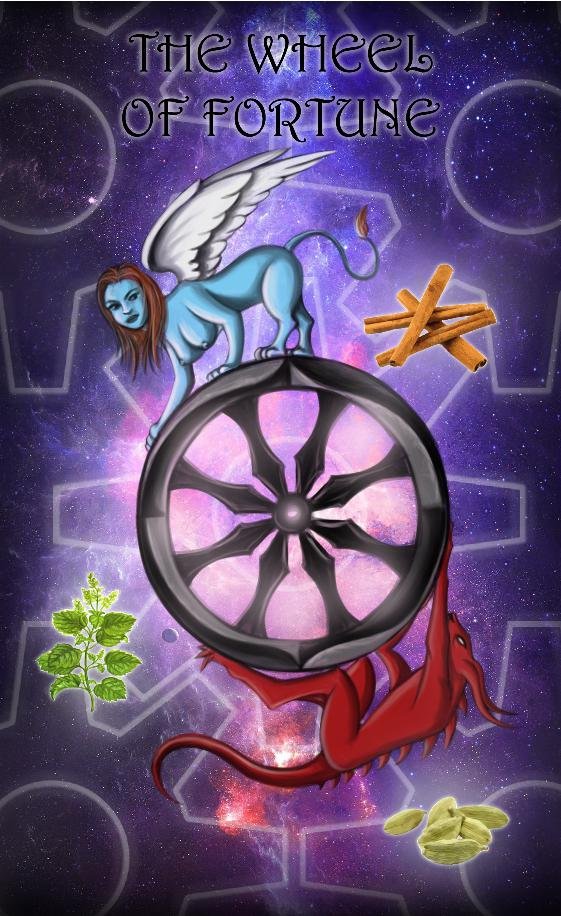
There are several things the Wheel of Fortune can suggest in a reading. But one generality you could make is that the card is all aboutmoving through the journey of life. Often, as suggested by the form of the wheel, this is a cycle: death, birth, and rebirth, for instance.
The Wheel of Fortune is the only one of the Major Arcana cards that refers directly to a concept from ancient mythology. While several ancient cultures had a concept of a wheel that represented being on the ups and downs with fortune, the one whose influence is probably most felt today – at least in Western culture – is the ancient Greek and Romans’.
The Wheel of Fortune in their belief was spun by the goddess Tyche, or Fortuna. She would spin the wheel randomly, explaining why fortune can turn for any of us, whether we “deserve” that change or not. Although Fortuna was sometimes depicted with other objects instead of the wheel – a ship’s rudder, for instance – the wheel won out, and it is the wheel that was used as the focal point in the Tarot Oil Tarot deck version of the Wheel of Fortune card. It became an immensely popular idea in medieval philosophy, and has continued to be so influential that well, there’s even a major gameshow that references it – that’s right, you may not watch “Wheel of Fortune” the same way again!
Fans of Greco-Roman mythology may also be familiar with a related concept when it comes to fortune: the Moiroi as they were known in ancient Greece, or the Parcae for the ancient Romans, are known to most of us as The Fates. The Fates are three goddesses who portioned out each human life. Clotho spun the thread of a life, Lachesis drew it out until it arrived at its predetermined length, and Atropos cut it, ending it.
The Fates have been depicted in different ways through time, sometimes as young and beautiful and other times as withered old women. Regardless, their power is undeniable. Even Zeus, the king of the gods, couldn’t overrule them. We see this in Homer’s “Iliad”, when Zeus must resign himself to the fact that his demigod son Sarpedon is destined to die.
The Fates were tricked once, though, by Zeus’s son Apollo, who got them drunk and made them promise they wouldn’t cut the thread of Admetus, one of his mortal lovers. The Fates weren’t entirely merciful, though – Apollo had to find a replacement for her. Fortunately for him, Alcestis, Admetus’s very kind and devoted wife stepped in and offered herself as the exchange.
In Tarot, Sharman-Burke and Greene’s Mythic Tarot features the Fates on the Wheel of Fortune card. (Great interview by Annie Dunlop with Sharman-Burke here.) Also, The Wheel of Fortune Tarot card is our Tarot Card of the Year for 2026 and you can hear some thoughts about this right here.