Samhain
The Wheel of the Year: Samhain (pronounced SAH-win) is actually considered the beginning of the year in ancient celtic tradition, well if not the new year precisely, then certainly the festival that signified the ending of one year and the beginning of the next.
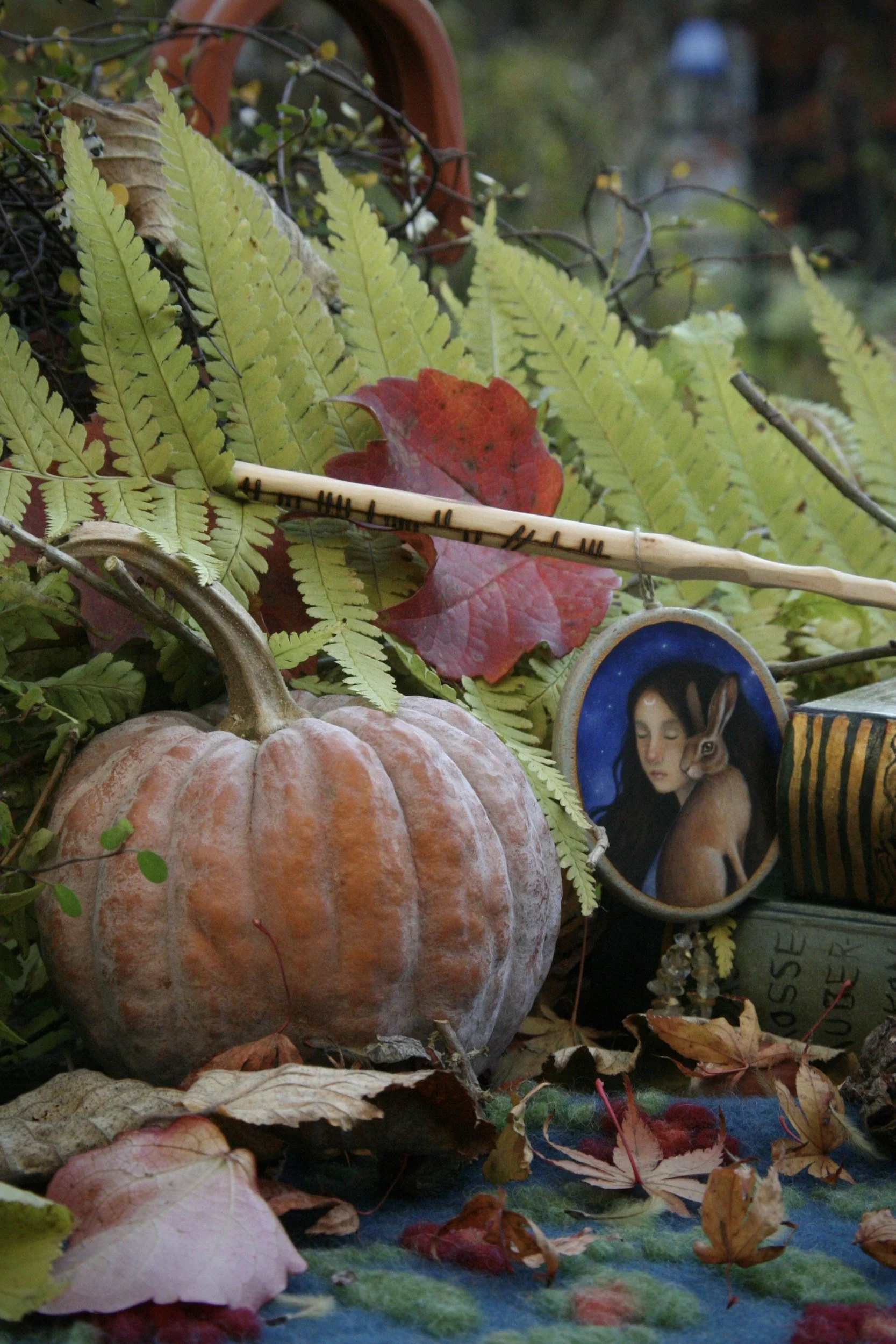
If you live in the northern hemisphere, you might be wondering why I’m talking about Samhain at this time. But remember that the calendar is flipped here in the southern hemisphere, so while one half of the world celebrates Samhain on October 31 into November 1, here in Australia it falls on the night of April 30 into May 1.
From its northern hemisphere date, you may have guessed that Samhain is tied to the secular celebration of Hallowe’en. In fact, it’s this Sabbat’s Celtic origins that inspired Hallowe’en in later, Christian Europe. The word ‘Hallowe’en’ is a mutation of the phrase ‘All Hallows Eve’ – the evening before All Hallows Day, when the hallowed saints were/are honoured. Although it’s far from being a solemn holiday, its association with ghosts and unusual happenings harkens back to its origins: Samhain is the point when the boundaries between the living and the dead are the most permeable. Those with the gift of divination will also feel their abilities heightened at this time.
Not all pagans celebrate Samhain by trying to breech the barrier between the dead and the living. For many, Samhain is the year’s end, and a time to think of death, but also of rebirth. At this point on the Wheel of the Year, the Goddess is an old woman. The God, her beloved, has died. But we know that the Wheel continues to turn and that soon he will be reborn again and their cycle will start over. Samhain is a time to contemplate this. It’s also a time to remember and honour those who have passed over.
This ambience of death and remembrance may seem prevalent during Samhain in the northern hemisphere; in addition to this Sabbat, there are other groups of people observing All Souls Day and All Saints Day. But Australians also are in a period of remembrance, having celebrated Anzac Day on April 25th. It seems that in either hemisphere, Samhain’s strong spiritual associations pervade the culture.
Whatever your beliefs and wherever you find yourself in the world, I wish you a Samhain full of remembrance, reflection, and hope for the new year.
PS: If you are interested in honouring the seasonal shifts, you might like to join me on the half day retreats Im running at Orana in Wodonga as they follow the Celtic Wheel of the Year and happen on or near the four greater sabbats, of Samhain, Imbolc, Beltane and Lammas. Details on the retreats can be found here.